
Incremental Housing Infrastructure Impacts Study
National · 2024–2025
Client: Arnold Ventures, for the Welcoming Neighbors Network
Location: Portland, OR · Nashville, TN · South Bend, IN · Charlottesville, VA
Year: 2024–2025
CP Role: Lead consultant
Practice Areas: Housing Policy
Team: Alex Joyce, Principal-in-Charge; Paul Runge, Project Manager; Tara Sorrels, Lead Researcher; Finley Heeb, Illustrations
The Challenge
Cities that legalize middle housing, such as duplexes, fourplexes, and townhomes, in neighborhoods once zoned for detached houses often hear that the existing sewers cannot take the added homes. The Welcoming Neighbors Network and Arnold Ventures wanted evidence on whether infill middle housing actually strains sewer capacity, and practical guidance that advocates and local officials could use.
Our Approach
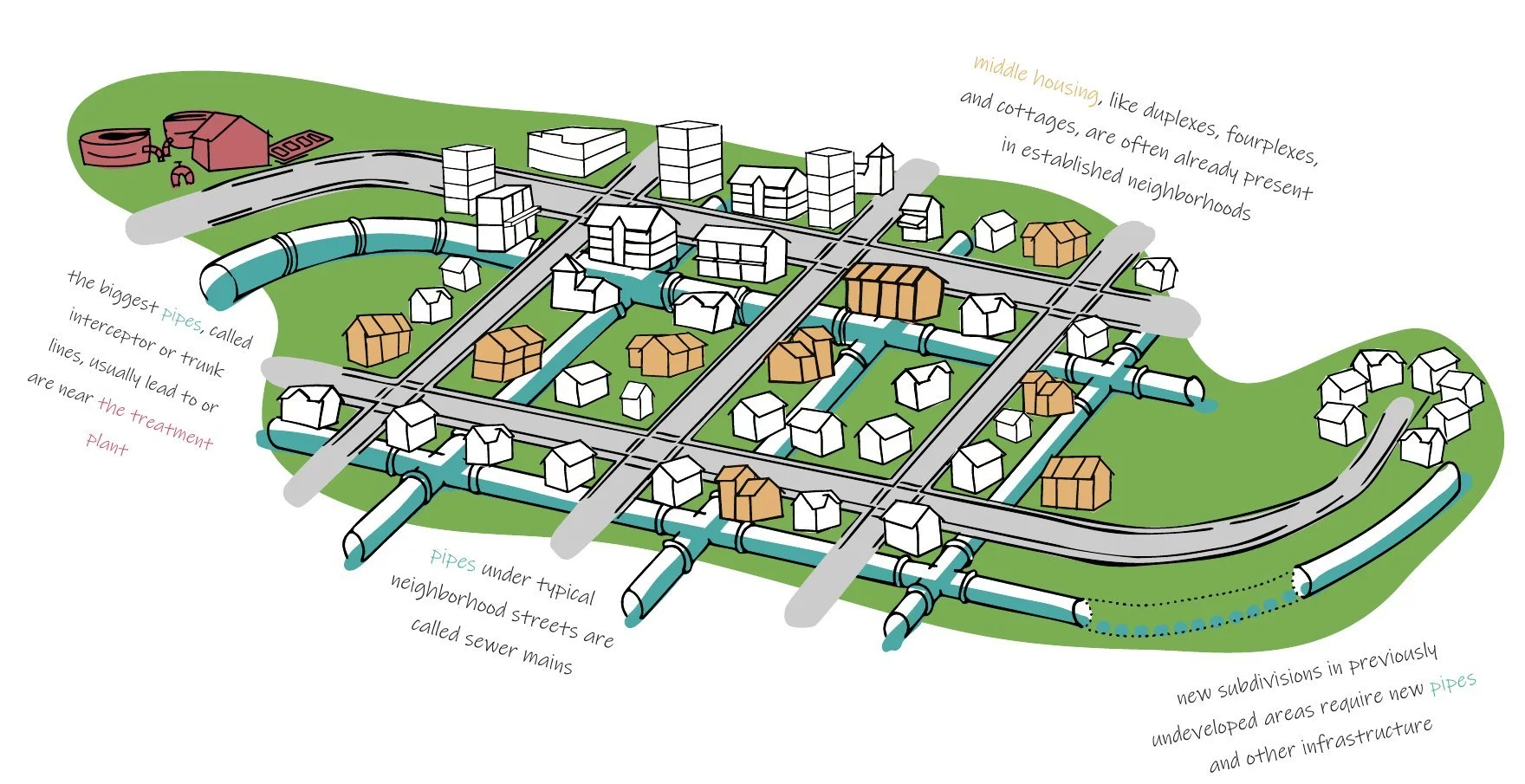
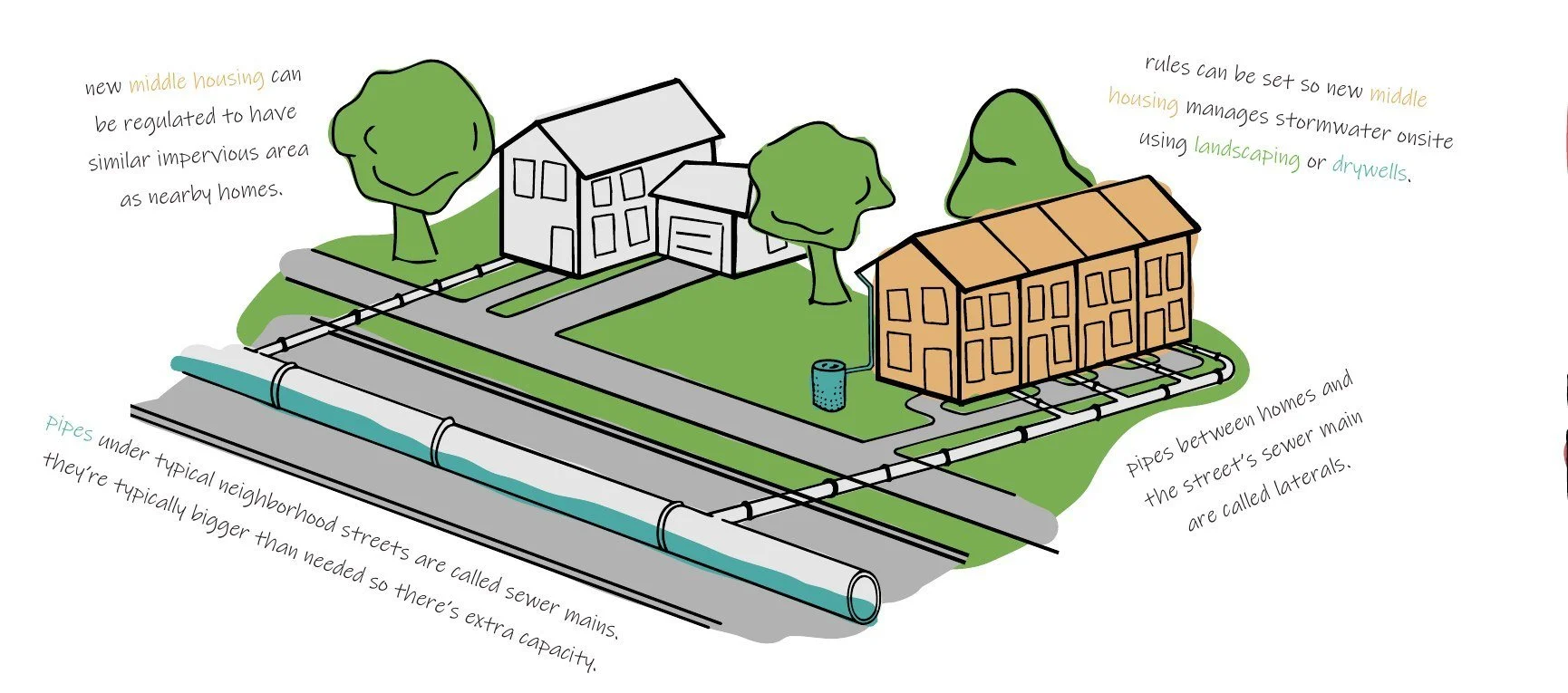
Between January and April 2025, Cascadia Partners interviewed private-sector civil engineers with national practices, and planners and engineers at the city planning and sewer agencies in Portland, Nashville, South Bend, and Charlottesville. We wrote a case study for each city and turned the findings into an illustrated research brief with key takeaways, myth-busting points, best practices for policymakers, and a glossary. The brief explains capacity in terms planners can use: sewer mains under neighborhood streets are typically at least 8 inches wide and can serve 100 or more homes, so bottlenecks tend to appear downstream, in trunk lines that utilities already monitor.
Outcome
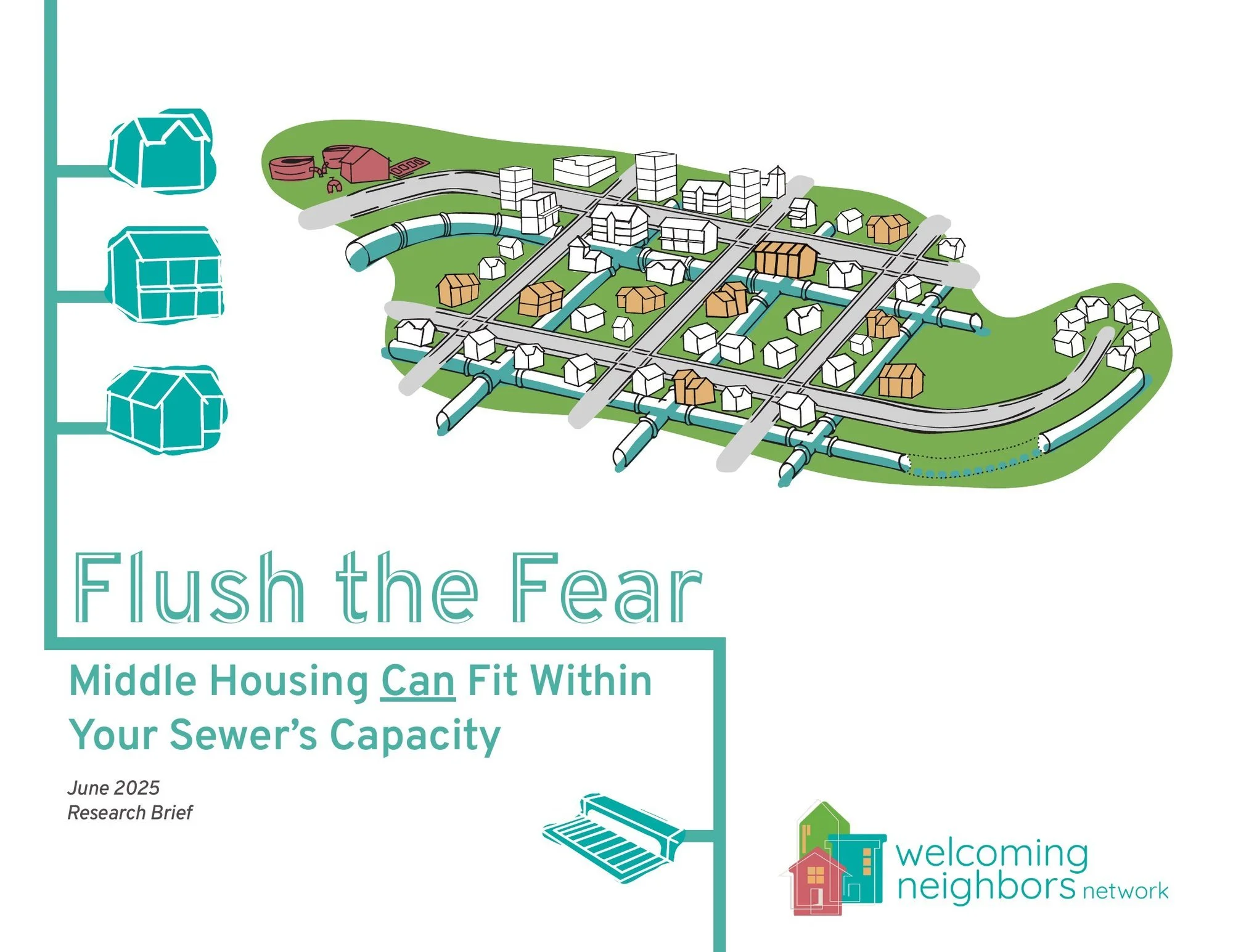
We delivered the brief, Flush the Fear: Middle Housing Can Fit Within Your Sewer’s Capacity, in June 2025. Each of the four cities had allowed forms of middle housing without notable impacts on sewer capacity or performance. The brief frames middle housing as incremental growth that spreads sewer impacts across the system and over time, which gives cities room to monitor and plan upgrades.
Related Projects


